


COMPREHENSIVE DIAGNOSTIC EVALUATION
Three sessions. One written report.
A real answer about what is going on.
$1,200 flat. Report delivered within two weeks.
Payment plans available up to 24 months.
Who this is for
➜ You have been given different diagnoses by different providers, and no one has explained how they fit together
➜ You need documentation for work or school, and a therapy note will not satisfy the request
➜ You have done years of therapy and something underneath the coping skills has never moved
➜ You suspect something was missed when you were younger
➜ You were told you are treatment resistant, which is only as meaningful as the diagnosis it was measured against
➜ You simply want an accurate map of yourself, and that is reason enough.
Why does this keep happening?
If you have been in therapy for years and still cannot explain what is wrong, you are not the problem. The process was.
Most therapy starts with a 50 minute intake, produces a working diagnosis by the end of the first session, and then never revisits it. That diagnosis follows you. It goes on your chart, into your insurance claims, and into the assumptions the next provider makes before they have met you.
If it was right, that is useful.
If it was incomplete, you can spend years working hard on the wrong thing and concluding that you are the reason it is not working.
A diagnostic evaluation is different. It is not a first session that happens to produce a label. It is a dedicated process, with structured tools, that exists for one purpose: to figure out what is actually going on and put it in writing.
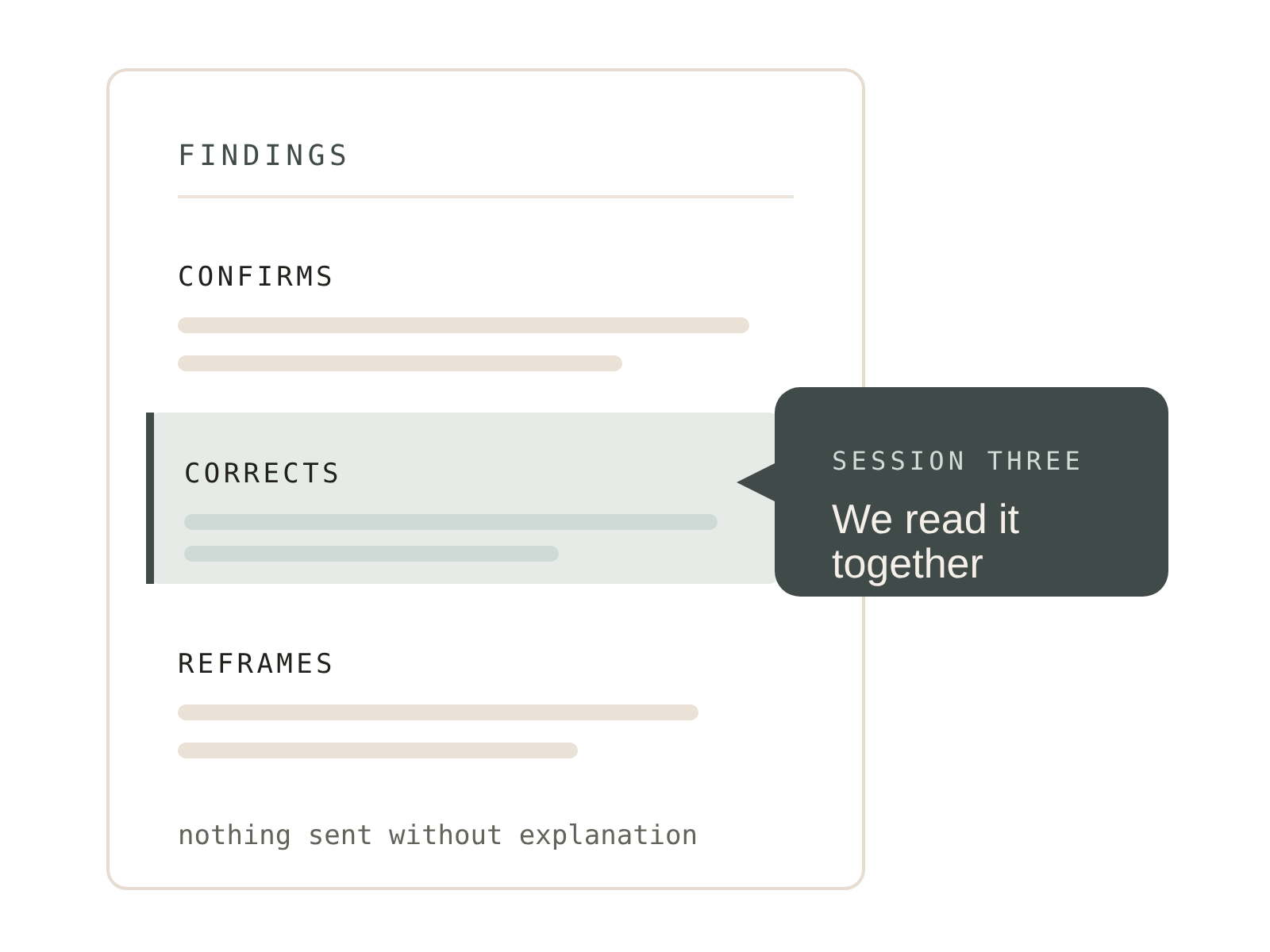
Where this ends up
It confirms.
You had a working name for something. The evaluation establishes it formally, separates it from what it is not, and explains how it actually shows up in your life.
It corrects.
What you have been carrying does not hold up under structured assessment. The report explains what fits better, and why the earlier picture was reasonable but incomplete.
It reframes.
No diagnosis is warranted. What you are dealing with is real and better explained by history, circumstance, or a pattern with no diagnostic code. The report says so plainly.
All three produce the same written report, the same conceptualization, and the same recommendations. You are not paying me to find something. You are paying me to look properly and tell you the truth.
What you leave with
A full written report. Not a summary letter. History, measures used, findings, conceptualization, and specific recommendations.
A conceptualization, not just a conclusion. A diagnosis tells you what. A conceptualization tells you why: how the pattern formed, what maintains it, and what it has been protecting.
Recommendations you can act on. What kind of therapy, what to prioritize, what to raise with a prescriber, what to stop spending energy on.
A document other people can use. Written to be read by providers, prescribers, and accommodations offices, not only by you.
A session where I explain all of it. You will not receive a document full of terminology and be left to interpret it alone.
How it works
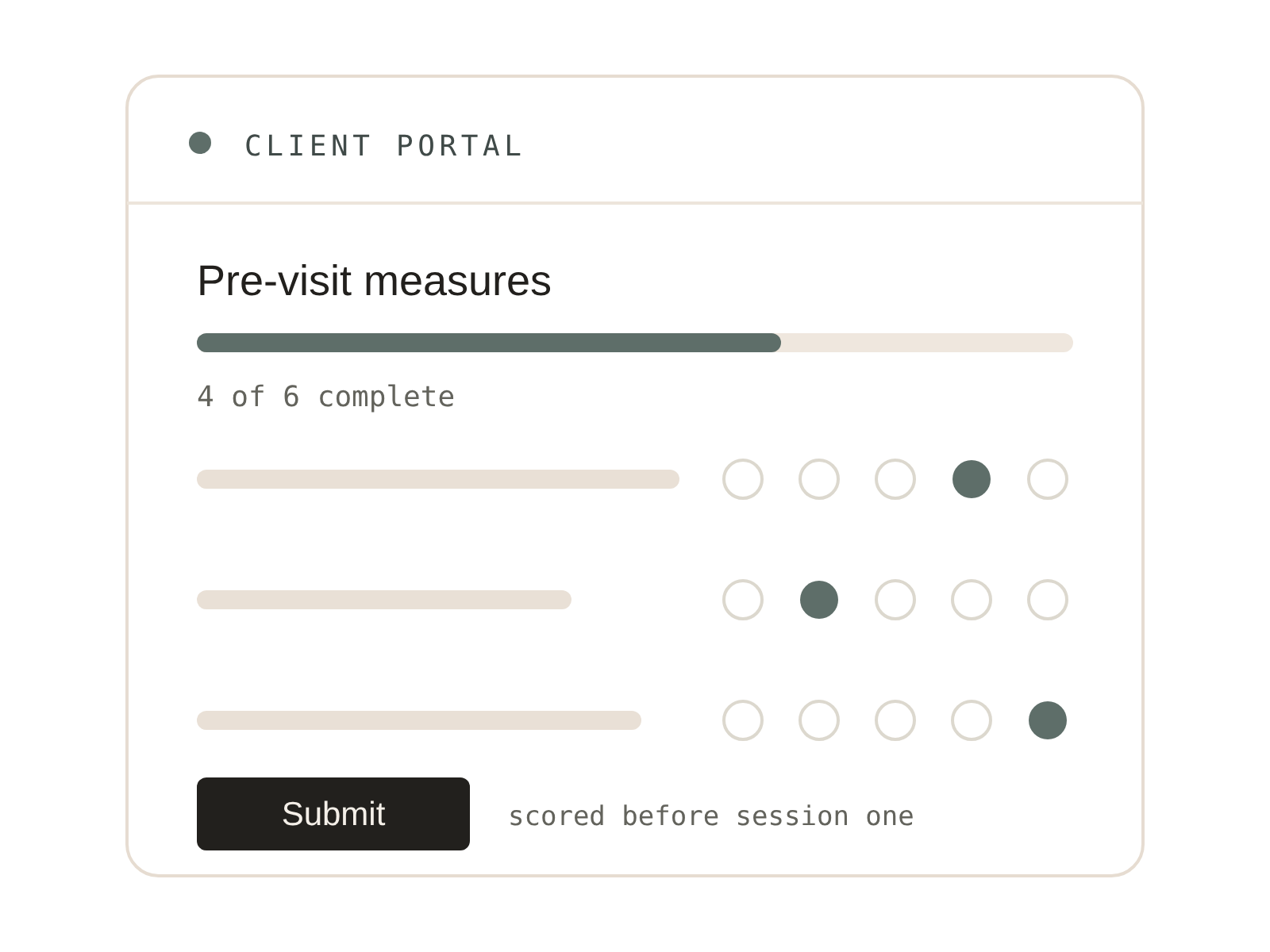
STEP 01 • BEFORE WE START
Measures first
Before we meet, you complete a set of self-report measures through the client portal. I score them in advance. Session one opens with real information already in front of us, so no part of that hour gets spent on paperwork.
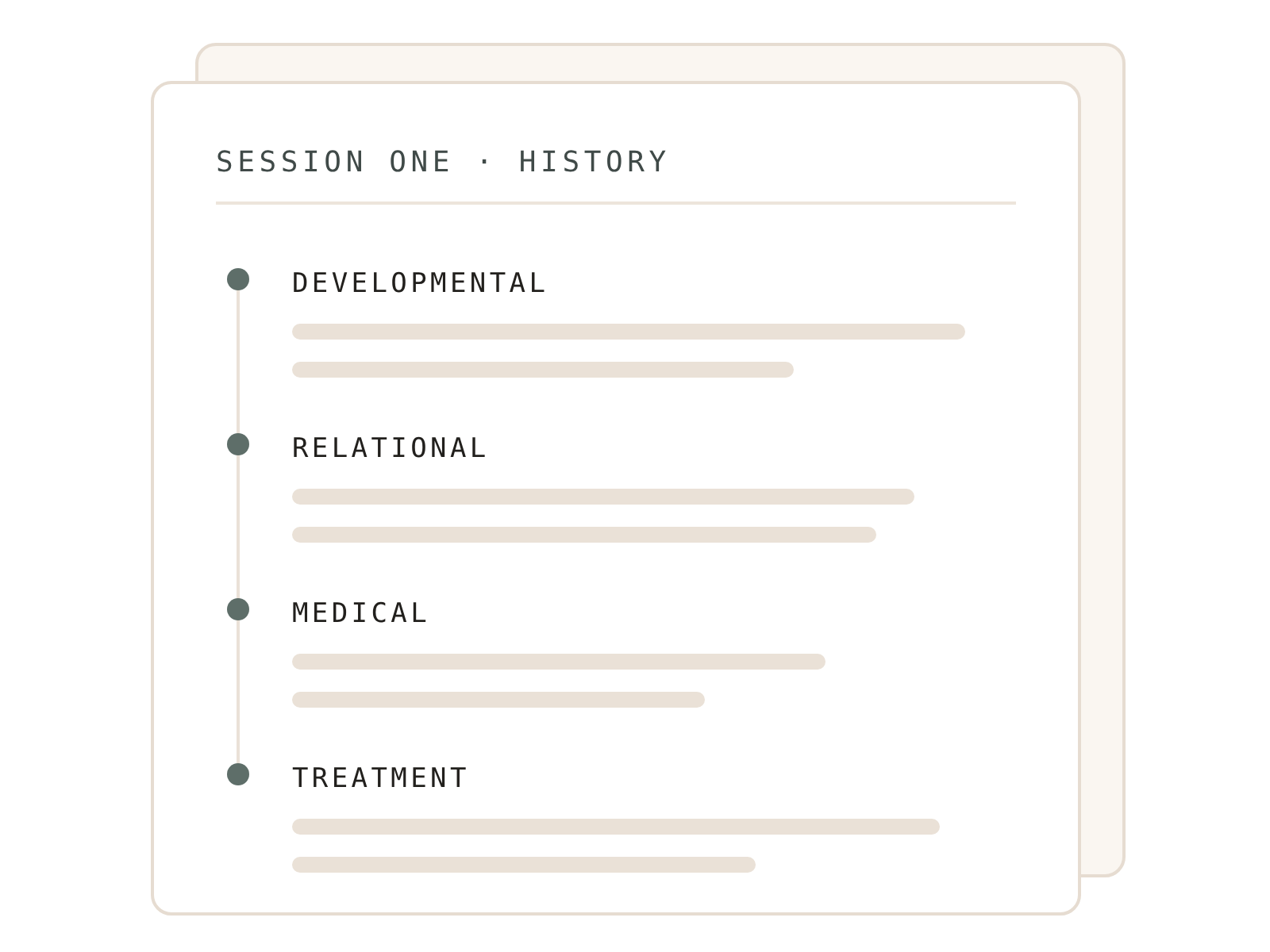
STEP 02 • SESSION 1
The history
Developmental, relational, medical, and treatment history. What brought you here. What has already been tried, and what did or did not help. And what you need this evaluation to answer, which is what shapes everything after this.
STEP 03 • SESSION 2
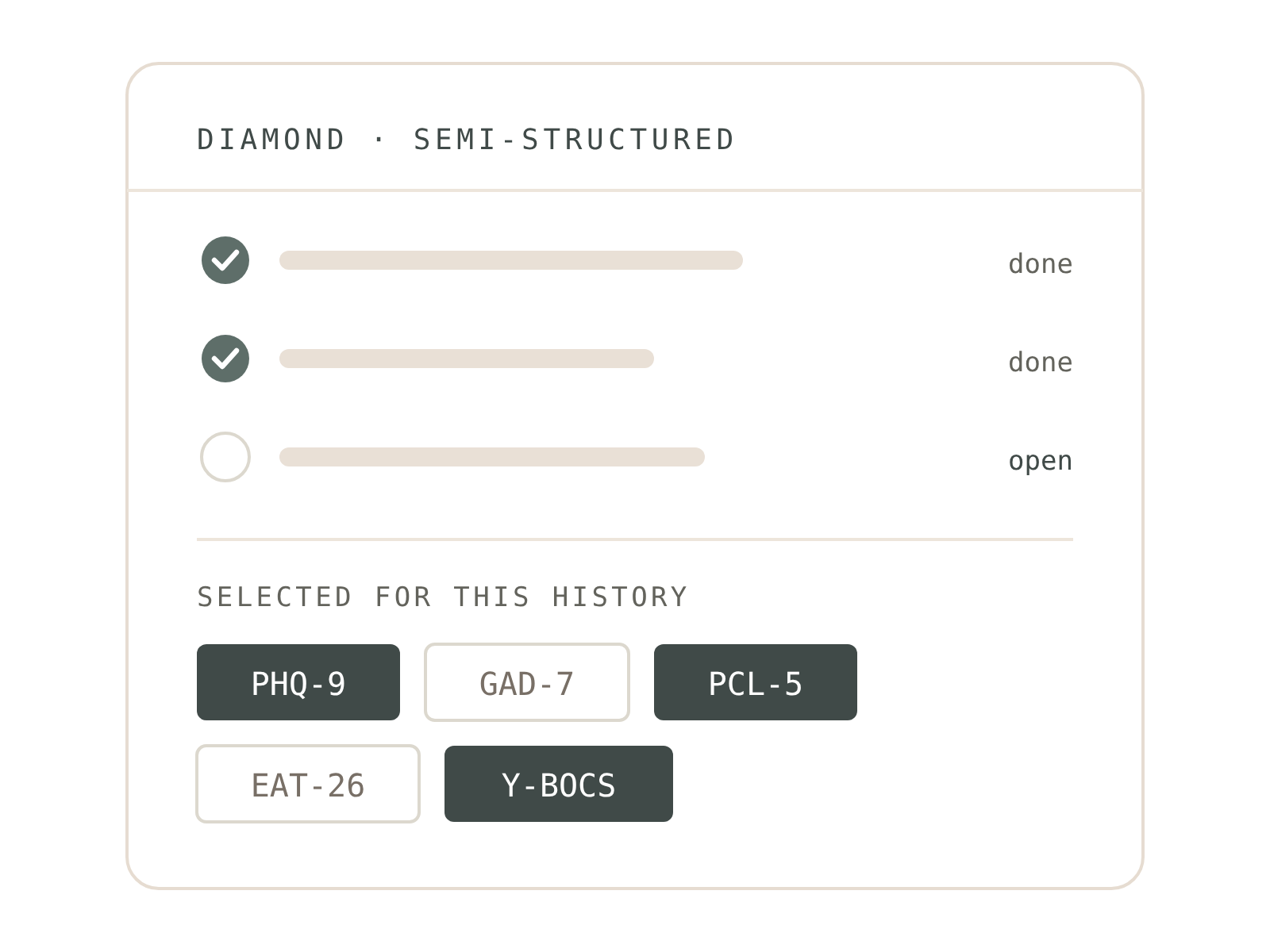
The structured interview
The DIAMOND, a semi-structured diagnostic interview, alongside your completed measures. Depending on your history, that may include the PHQ-9, GAD-7, PCL-5, EAT-26, Y-BOCS, or others. What gets used is chosen from your history. It is not a fixed battery handed to everyone.
STEP 04 • BETWEEN SESSIONS
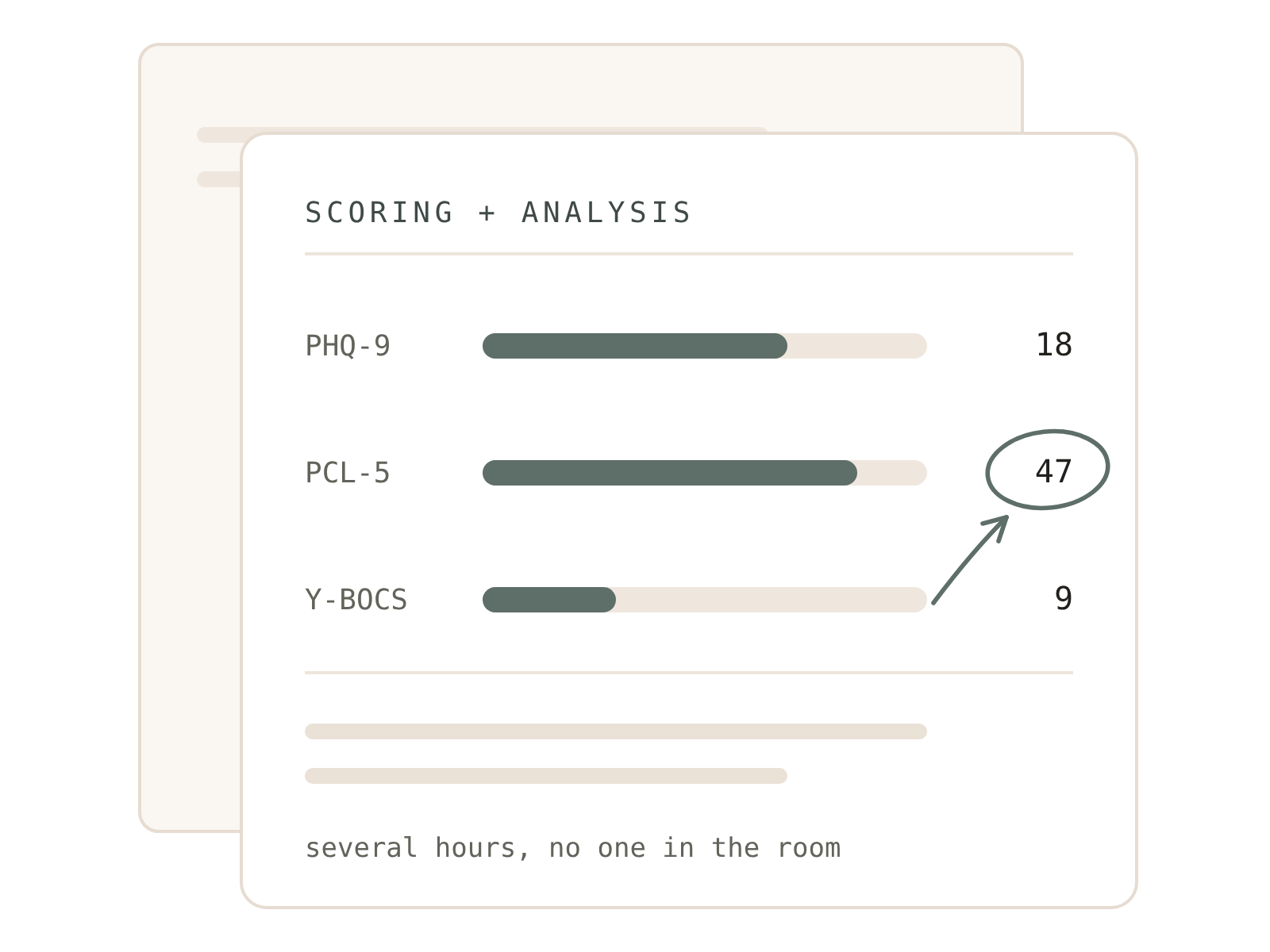
The part you never see
Scoring, analysis, and writing. Several hours of work with no one in the room, between your second session and your third. This is where the findings actually come together, and it is the reason the report can say something specific about you.
STEP 05 • SESSION 3
Report Feedback
We go through all of it together. What the measures showed, what they ruled out, and what the findings do and do not mean for you. You ask questions. Nothing arrives in your inbox without me explaining it first.
YOUR REPORT
Written and delivered within two weeks
Most evaluations finish in three sessions. If your history needs a fourth, it is included at no additional cost.
free · 15 minutes · phone or video

Who I am
I’m Sydney Carter, a Licensed Professional Counselor and the founder of Shadow Work Psychotherapy here in Aiken.
The part I like most is the puzzle. Sitting with someone who has been unsure about their own diagnosis for a long time, going through every detail, and finally being able to give them an answer.
Most of the people I evaluate have seen other providers first. Usually the problem was not that someone got it wrong. It is that nobody had the time to go through every possibility. A fifty minute session does not allow for it. This evaluation is built so that it does.
I keep this practice deliberately small. Two clients a day, and a limited number of evaluations at a time, because each report takes several hours of writing outside of session. That is a constraint I chose. It is the only way the work stays this thorough.
Investment
$1,200
One flat fee for the entire evaluation, including every hour of report writing. No hourly meter. No invoice at the end you did not expect.
Pay in full through checkout. Credit and debit cards, HSA and FSA cards accepted.
Or split it into payments. Subject to approval:
Four interest-free payments of $300 through Klarna
Six monthly payments of $200 at 0% APR through Affirm
Longer terms up to 18 months through Affirm or 24 months through Klarna, with interest
Six months at $200 is roughly the cost of one therapy session per month.
Or pay per session through the client portal, which is the better route if you plan to seek out of network reimbursement. A superbill is available either way.
Optional Additions
+ Review of prior records or evaluations - $200
+ Collateral interview with a partner or family member, with your written consent - $175
+ Targeted letter to a specific recipient, beyond the report - $175
+ Rush turnaround, one week instead of two - $250
What I commit to
I cannot promise you a particular diagnosis, and you should be wary of anyone who does. Here is what I can promise.
You get the full written report no matter what it says. The report is the deliverable. Findings do not change that.
You know the total cost before you pay anything. If your situation needs something outside standard scope, you hear it at the consultation, with the number, before you commit.
If this is not right for you, I will say so. Consultations are free. I would rather refer you out than take $1,200 for an evaluation that cannot answer your question.
Your report is built to be used. It is a professional document, written for other readers, not a summary of my impressions.
Frequently asked questions
-
An intake starts therapy and produces a working diagnosis as a byproduct. An evaluation is a standalone process with structured tools, dedicated interpretation time, and a written report as the actual product.
-
No. Many people complete the evaluation and take the report to a provider they already have, or to a prescriber, or simply keep it. Continuing with me is available and never assumed.
-
Common, and often ideal. The report is written so they can use it directly. With your written consent, I am glad to speak with them.
-
I don't take insurance directly, but I'm happy to provide a superbill upon request. A superbill is a detailed receipt you can submit to your insurance company for possible reimbursement of out-of-network benefits. Reimbursement depends on your specific plan, so I recommend checking with your insurance provider about your out-of-network coverage before starting services.
-
Usually three to four weeks from first session to delivered report, depending on scheduling. Add two weeks after feedback for the report, or one week with rush turnaround.
-
Often, yes. The report addresses functional impact and recommendations, which is what most accommodations processes ask for. Bring any specific form or recipient to your consultation so the report can address it directly.
-
Yes. Adult ADHD is one of the most common questions I am asked, and structured interviewing is specifically designed to distinguish it from what it is regularly confused with, including anxiety, trauma responses, and depression. Since I do not administer cognitive testing, ask any institution requiring documentation what they will accept before scheduling.
-
Then the report says so, explains what does account for your concerns, and gives recommendations accordingly. That is a real finding, not a failed evaluation.
-
Yes, with the standard legal exceptions. The report goes to you. It goes to anyone else only if you ask in writing.
-
A fourth is included at no additional cost. If your situation needs more than that, you will hear it at the consultation with the number attached.
-
About 15 to 20 minutes by phone or video. We talk about what you need to find out and whether this can actually answer it. If it cannot, you leave with a referral and it costs you nothing.
The next step
Every evaluation starts with a free consultation, 15 minutes, phone or video.
We will talk about what you are hoping to find out and whether this is the right way to find it. If it is, we schedule. If it is not, you leave with a referral and it has cost you nothing.